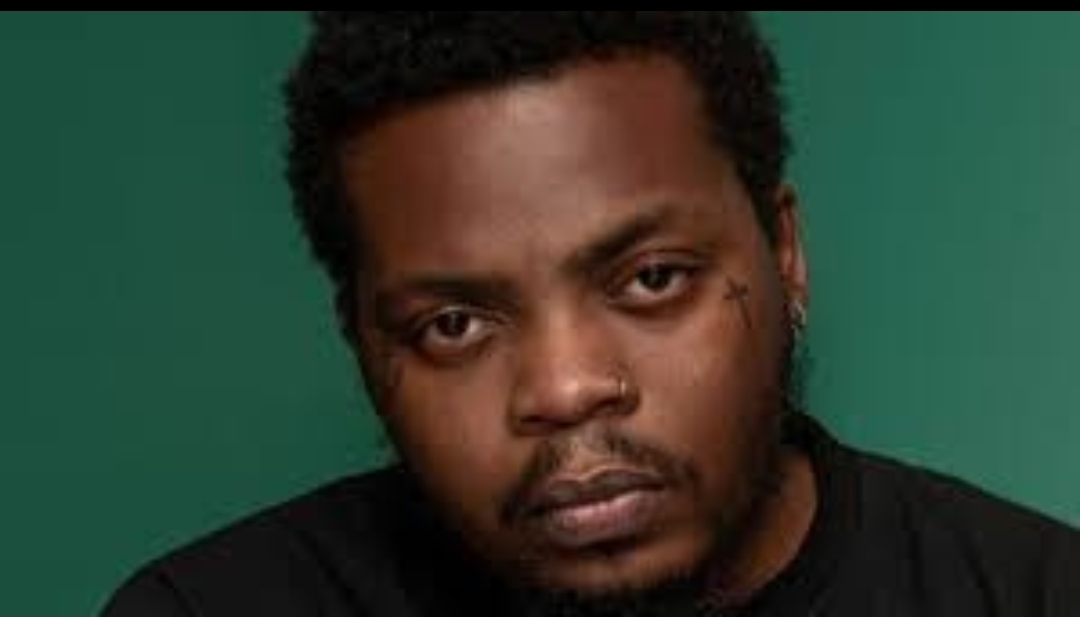
In the bustling, high octane heart of Lagos, there is a place called Bariga. It’s a neighborhood where the sun hits the pavement a little harder, and the hustle never sleeps. If you were walking those streets in the late 90s, you might have passed a young boy named Olamide Gbenga Adedeji, likely dreaming of things far beyond the cramped corners of his childhood home.

Today, that boy is known as Olamide Baddo, the undisputed “King of the Streets” and one of the most influential African musicians of the 21st century. His story isn’t just about music; it’s a masterclass in resilience, business acumen, and the art of staying “street” while thinking “global.”
The Bariga Blueprint: Humble Beginnings
Born on March 15, 1989, Olamide didn’t have a silver spoon; he had a microphone and a vision. Growing up in a slum meant that “surviving” was the first skill he had to master. In interviews, Olamide often reflects on how difficult it was to even afford three square meals. This lack of resources didn’t break him; it fueled a fire that would later incinerate the Nigerian music charts.
He initially set out to study Mass Communication at Tai Solarin University, but life had other plans. Due to financial constraints, he had to drop out. For many, this would be a dead end. For Olamide, it was the moment he decided that if he couldn’t be a scholar, he would be a legend. He leaned into his gift for wordplay, blending the raw energy of the streets with rhythmic Yoruba rap.
2010: The “Eni Duro” Earthquake
Every legend has a “Big Bang” moment. For Olamide, it was 2010.
When the music video for “Eni Duro” hit the screens, the Nigerian music industry stood still. Dressed in various colorful outfits and delivering rapid fire Yoruba bars with the confidence of a veteran, Olamide signaled a shift. He wasn’t just a rapper; he was a storyteller for the disenfranchised.
Under the wings of ID Cabasa and the Coded Tunes family, he released his debut album, Rapsodi, in 2011. It featured the smash hit “Omo To Shan” with a young Wizkid, proving that Olamide could play in the “pop” leagues while keeping his street cred intact.
Building the YBNL Empire
Most artists are satisfied with personal fame. Olamide, however, wanted an empire. In 2012, he took a massive risk by leaving Coded Tunes to start his own imprint: YBNL (Yahoo Boy No Laptop) Nation.
The name itself was a cheeky nod to the hustle culture of Lagos, but the business was serious. His sophomore album, YBNL, cemented his status as a hitmaker with tracks like “First of All” and “Voice of the Street.”
The Consistency King
One of the most remarkable things about Olamide is his work ethic. For nearly a decade, he released a studio album every single year.
- 2013: Baddest Guy Ever Liveth (Home to the legendary “Durosoke”)
- 2014: Street OT
- 2015: Eyan Mayweather
- 2016: The Glory
This wasn’t just music; it was a cultural takeover. He introduced new slangs, new dances (who could forget the Shakiti Bobo?), and a new sense of pride for the “street” kids of Nigeria.
The Ultimate Talent Scout: The YBNL Academy
If Olamide retired in 2018, his legacy would still be secure. But what truly sets him apart is his “Midastouch” as a label boss. Olamide didn’t just sign artists; he birthed superstars.

The list of artists who have passed through the YBNL school of excellence is staggering:
Adekunle Gold: Transformed from a “graphics designer” to a highlife king.
Lil Kesh: The prince of street-hop.
Fireboy DML: The soulful poet who took “Peru” to the global charts with Ed Sheeran.
Asake: The “Mr. Money” who has dominated the global Amapiano/Afrobeats scene from 2022 to 2026.
Olamide’s leadership style is unique. He often stays in the background, providing the platform and the wisdom, allowing his signees to shine brighter than him. It’s a rare form of selflessness in a notoriously ego-driven industry.
The Global Transition: From “Baddo” to “Olamidé”
As the 2020s rolled in, Olamide underwent a sonic evolution. He moved away from the high-tempo street rap and explored a more laid-back, “chill” vibe. This era gave us masterpieces like Carpe Diem (2020) and UY Scuti (2021).
By 2023, with the release of Unruly, Olamide began hinting at retirement, but the universe had other plans. His collaboration with Asake on “Amapiano” earned him his first Grammy nomination at the 66th Annual Grammy Awards.
2025-2026: The Legend Matures
In June 2025, he released his 11th studio album, the self titled Olamide. This wasn’t just a local project; it featured global heavyweights like Dr. Dre, Wizkid, and Popcaan.
Selling out the OVO Arena Wembley in late 2025 proved that the boy from Bariga was no longer just a local champion he was a global icon. As of 2026, his influence is seen in how he bridges the gap between the old guard of Nigerian rap and the new, streaming-heavy Afrobeats era.
Why We Love Olamide: The “Street” Philanthropist
Beyond the music, Olamide is beloved for his character. He is rarely involved in industry “beef” and is known for his quiet philanthropy. Whether it’s helping a struggling artist find their feet or providing financial support to his community in Bariga, Baddo does it without the cameras rolling.
He proved that you don’t have to change who you are to reach the top. You don’t have to fake an accent or abandon your roots. You just have to be unapologetically you.
The Legacy of the Voice of the Streets
Olamide’s journey is a beacon of hope for every young person in Lagos, Nairobi, Accra, or London who feels like the odds are stacked against them. He showed us that:
Consistency is Key: You can’t be a legend if you don’t show up every day.
Loyalty Matters: The people you lift up will eventually help carry your legacy.
Adapt or Die: From CDs to streaming, from rap to Afropop, Olamide adapted without losing his soul.
As we look at Olamide in 2026, a Grammy nominated mogul, a father, and a mentor we don’t just see a musician. We see the heartbeat of a generation.
“I’m not a businessman; I’m a legend” While Jay-Z said it, Olamide lived it the Nigerian way.
Leave a Reply