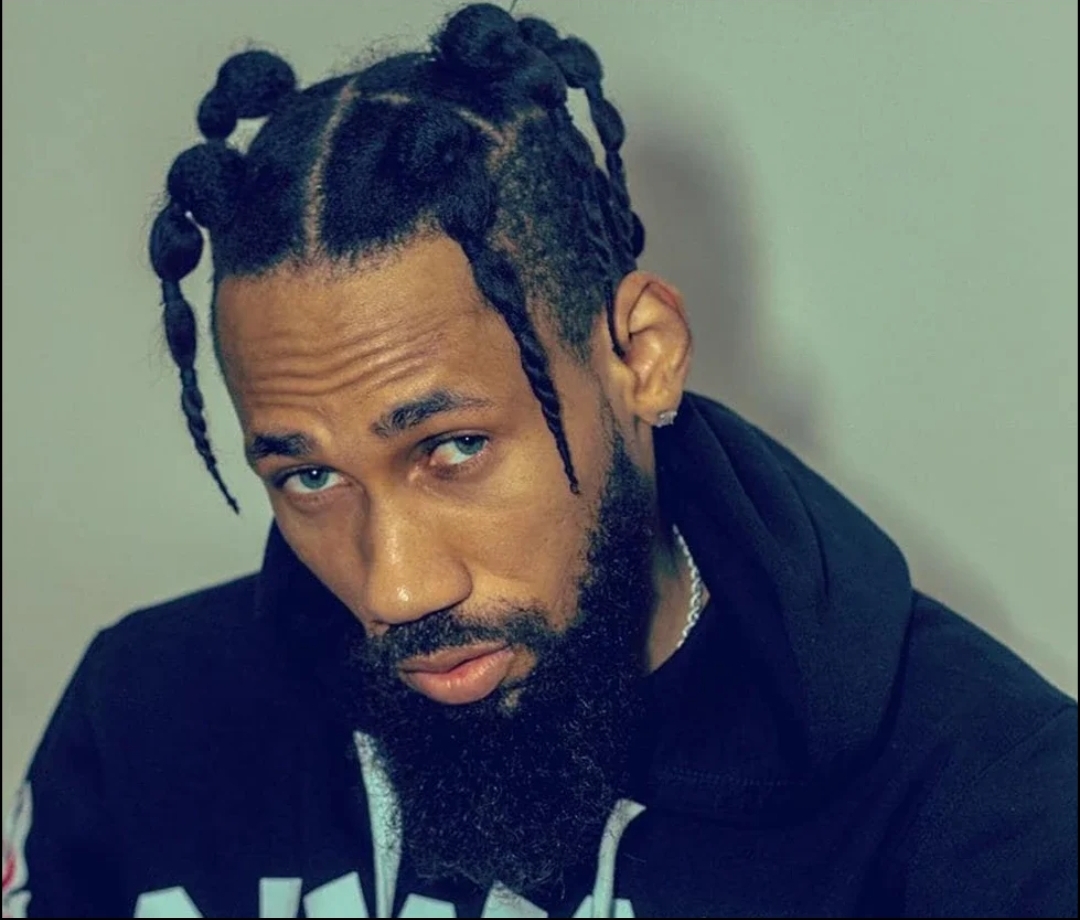
In the heart of the Coal City, where the hills of Enugu roll into the horizon and the scent of okpa fills the morning air, a legend was brewing. Long before he became the “Beast from the East” or the “Playmaker,” he was just Chibuzor, a young man with a dream that felt as large as the statues in the city square.

Today, the name Phyno is synonymous with indigenous excellence, a bridge between traditional Igbo culture and modern Hip-Hop. But his story isn’t just about hit records and sold-out stadiums; it’s a masterclass in persistence, cultural pride, and the audacity to be different.
The Early Days: A Phenomenal Beginning
Born and raised in Enugu, Chibuzor Nelson Azubuike was the fourth of five children. Growing up in the “042” (Enugu’s area code) gave him a unique perspective on life. While many of his peers were looking at the stars and dreaming of becoming doctors or pilots, Chibuzor’s heart beat to a different rhythm.
Interestingly, music wasn’t his first choice. In his secondary school days, he had a knack for playing the drums and the piano. He eventually developed an interest in production, realizing he could create the “canvas” upon which artists painted their stories.

It was a school friend who gave him the nickname “Phynomenal.” Little did that friend know that the name shortened to Phyno would one day be chanted by millions across the globe.
Behind the Boards: The Producer Era
Before Phyno ever picked up a microphone to rap, he was the guy behind the computer. In the mid-2000s, Phyno started producing for established names in the industry. He was the secret sauce behind many hits coming out of the East.
He spent years perfecting his craft in Enugu, learning how to blend the heavy basslines of Hip-Hop with the melodic sensibilities of the Igbo people. During this period, he wasn’t looking for fame; he was looking for a sound.
“I started producing because I wanted to hear music that didn’t exist yet. I wanted to hear the streets of Enugu speaking through international beats.” Phyno in an early interview.
The Big Gamble: Moving to Lagos
Every Nigerian artist knows that while Enugu is the soul, Lagos is the engine. In 2010, Phyno made the life-altering decision to move to Lagos. It was a massive risk. He was already a “big fish” in the small pond of the East, but in Lagos, he was just another talented kid with a dream.
He began rapping because he felt that the artists he was producing for weren’t capturing the “vibe” correctly. He decided to do it himself. He chose to rap in his native Igbo language, a move that many industry “experts” at the time called professional suicide. They argued that he wouldn’t be able to “cross over” to the West or the North.
Phyno ignored them. He knew that authenticity has no language barrier.
4. The Breakthrough: “Ghost Mode” and the Olamide Connection
In 2012, the Nigerian music landscape changed forever. Phyno released “Ghost Mode” featuring the King of the West, Olamide.
It was a cultural reset.
Seeing the two regional powerhouses one rapping in Yoruba and the other in Igbo collaborate so seamlessly proved that Nigerian Hip Hop was no longer just an imitation of America. It was ours. The chemistry between Phyno and Olamide (often referred to as “2 Kings”) became one of the most iconic partnerships in African music history.
The Debut Album: No Guts No Glory
Following the success of “Ghost Mode,” Phyno released his debut studio album, No Guts No Glory (2014). The album featured hits like:
“Alobam” (An anthem for brotherhood and loyalty)
“Man of the Year”
“Parcel”
“Alobam” wasn’t just a song; it became a cultural greeting. It solidified Phyno as the mouthpiece of the Igbo youth. He wasn’t just rapping; he was documenting the struggle, the hustle, and the eventual victory of the average street boy.
The Evolution: From Rapper to Global Icon
If you think Phyno is just a rapper, you haven’t been listening. As the years progressed, he showed incredible versatility. He tapped into his roots, embracing the Highlife sounds of legends like Chief Osita Osadebe and Oliver De Coque.

Songs like “Fada Fada” featuring Olamide saw Phyno singing more than rapping, delivering a thanksgiving anthem that played in every church, club, and wedding across Nigeria. This transition allowed him to reach an older demographic while keeping his young fanbase loyal.
Key Milestones in Phyno’s Career:
The Phynofest: He started his own stadium concert series, “Phynofest,” which regularly pulled over 30,000 people in cities like Enugu and Onitsha.
Penthauze Music: He established his own record label, signing talented artists and proving his eye for business and mentorship.
Collaborations: From Flavour and Timaya to Burna Boy and Davido, Phyno has worked with the “Who’s Who” of African music.
6. Why Phyno Matters: The Cultural Impact
Phyno did for the Igbo language what rappers like Snoop Dogg did for the West Coast he made it “cool” to be yourself. Before Phyno, there was a trend of “forming” American accents to sound sophisticated. Phyno stepped onto the stage with a mohawk, gold chains, and the thickest Enugu accent, and told the world: “This is who I am.”
He gave a voice to the Igbo Boy hustle. He spoke about the “Imana” (Knowledge), the “Ogene” (Traditional bell), and the “Nwanne” (Brotherhood). He turned the local dialect into a global currency.
The Private Life of the Playmaker
Despite his massive fame, Phyno remains one of the most private celebrities in Nigeria. He stays away from “social media clout” and focuses strictly on the music. This “quiet billionaire” energy has only added to his mystique. He is known for his discipline, his love for his family, and his deep rooted connection to his hometown.
From the dusty streets of Enugu to the shimmering lights of international stages, Phyno’s journey is a testament to the power of staying true to your roots. He didn’t try to fit into the industry; he made the industry fit him.
As he continues to release hits like “Highway” and his latest projects, Phyno remains a beacon of hope for every young producer in a small bedroom studio. He is living proof that you don’t need to change your language or your story to conquer the world you just need to be Phenomenal.
Frequently Asked Questions about Phyno
What does Phyno mean?
It is a shortened version of “Phenomenal,” a nickname given to him by a secondary school friend.
Is Phyno married?
Phyno is very private about his personal life. While he welcomed a child recently, he has kept details about his partner out of the public eye.
What was Phyno’s first hit song?
While he had underground success, “Ghost Mode” (2012) featuring Olamide is widely considered his massive breakout hit.
Where is Phyno from?
He is an indigene of Anambra State but was born and raised in Enugu State, Nigeria.
Leave a Reply