

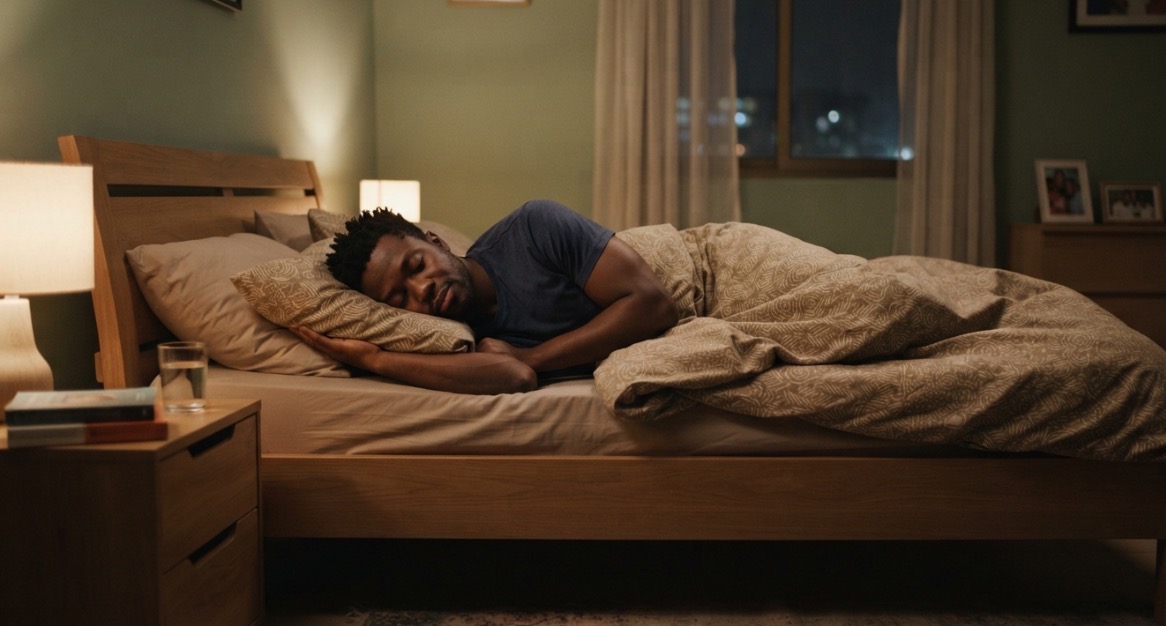
Poor sleep can slash testosterone by 10-15%, stall muscle recovery, and destroy focus. Learn the science and proven ways to reverse the damage.
You can train hard, eat clean, and still feel flat. Strength stalls. Motivation dips. Focus scatters by mid-afternoon. For many men (and women under high stress), the hidden culprit is not training volume or macros it is chronic poor sleep.
Sleep is not passive downtime. It is an active biological process that governs hormone production, tissue repair, and brain performance. When sleep is short, fragmented, or low quality, three critical systems take a direct hit: testosterone, physical recovery, and cognitive focus. The effects compound quickly and feel like aging in fast forward.
This article breaks down the science of how poor sleep sabotages each of these pillars, what the research actually shows, and practical steps you can take to reverse the damage.
Why Sleep Matters More Than Most People Realize
Adults spend roughly one-third of life asleep. During that time the body and brain run essential maintenance that cannot occur efficiently while awake. Deep slow wave sleep (N3) and REM sleep drive distinct but complementary processes:
• Slow-wave sleep is the primary window for growth hormone release, muscle protein synthesis, and cellular repair.
• REM sleep supports memory consolidation, emotional regulation, and aspects of testosterone secretion.
• Overall sleep duration and continuity influence the hypothalamic pituitary gonadal (HPG) axis and the balance between anabolic and catabolic hormones.
When sleep is restricted or disrupted, these processes degrade. The result is measurable drops in testosterone, slower recovery from training or daily stress, and clear impairments in attention and executive function.
How Poor Sleep Lowers Testosterone
Testosterone does not rise randomly. In men, the largest daily surge occurs during sleep, particularly in the early part of the night and in association with normal sleep architecture. Fragmented or shortened sleep blunts this rise.
A landmark study restricted healthy young men to five hours of sleep per night for one week. Daytime testosterone levels fell 10 15% compared with a rested baseline. That drop is roughly equivalent to the natural decline seen over 10-15 years of aging. The reduction was most noticeable in the afternoon and evening hours precisely when many men need energy, drive, and recovery capacity.
Meta-analyses of controlled studies confirm that total sleep deprivation (24 hours or more) produces a clear reduction in serum testosterone. Partial sleep restriction shows more mixed short-term results, but chronic restriction and poor sleep quality consistently associate with lower levels in larger population data, including analyses from the National Health and Nutrition Examination Survey (NHANES).
Mechanisms include:
• Reduced pulse frequency and amplitude of luteinizing hormone and testosterone secretion.
• Elevated evening cortisol that can suppress the HPG axis.
• Disruption of the normal overnight testosterone rise tied to REM and deep sleep.
• Secondary effects from inflammation and metabolic stress that accompany sleep loss.
Low testosterone then feeds back into the problem. Reduced vigor, lower motivation to train or move, increased body fat, and poorer sleep quality create a self-reinforcing cycle. Men with obstructive sleep apnea often show lower testosterone even after accounting for obesity, underscoring the direct role of sleep disruption and oxygen desaturation.
The practical takeaway is straightforward: consistent 7-9 hours of quality sleep is one of the most potent natural levers for supporting healthy testosterone levels. No supplement or training tweak reliably compensates for chronic sleep debt.
Sleep, Recovery, and the Anabolic Environment
Recovery is not just “rest.” It is the period when training adaptations actually occur. Sleep is the primary driver of that process.
Growth Hormone and Protein Synthesis
The majority of daily growth hormone (GH) is released during deep slow-wave sleep. GH stimulates insulin-like growth factor-1 (IGF-1), which promotes protein synthesis, muscle repair, bone health, and fat metabolism. When deep sleep is cut short, this nocturnal GH pulse is blunted.
Acute total sleep deprivation has been shown to reduce postprandial muscle protein synthesis rates by approximately 18% in healthy adults. At the same time, cortisol rises and testosterone falls, shifting the hormonal environment toward catabolism. Gene expression markers related to protein breakdown can also increase. Over time this combination limits muscle repair, reduces training adaptations, and can contribute to loss of lean mass.
Even one night of total sleep loss after exercise induced muscle damage alters the inflammatory and hormonal response, elevating cortisol and the cortisol to testosterone ratio while changing cytokine patterns that influence recovery speed.
Inflammation and Tissue Repair
Chronic short sleep elevates pro-inflammatory markers such as interleukin-6 (IL-6) and C-reactive protein. Elevated inflammation slows tissue repair, increases perceived soreness, and can impair glycogen replenishment. Athletes and highly active individuals feel this as stalled progress, lingering fatigue, and higher injury risk.
Sleep also supports immune regulation and metabolic recovery. Without adequate deep sleep, the body remains in a higher-stress, lower-repair state even on rest days.
In short, training hard while sleeping poorly is like trying to build a house while the construction crew works only half shifts. Stimulus without recovery produces limited results.
How Sleep Loss Destroys Focus and Cognitive Performance
The brain is highly sensitive to sleep loss. Attention, working memory, and executive function are among the first systems to degrade.
Attention and Vigilance
Sustained attention is especially vulnerable. Sleep restricted individuals show increased lapses (brief failures to respond), slower reaction times, and greater variability in performance. These lapses can feel like momentary “zoning out” and are linked to local sleep like activity in the brain even while the person is awake. Recent research has even tied some attentional failures to cerebrospinal fluid dynamics that normally occur during sleep but begin intruding into wakefulness under sleep pressure.
Performance on the Psychomotor Vigilance Task a standard measure of sustained attention deteriorates in a dose dependent manner with successive nights of restricted sleep. The impairment can reach levels comparable to moderate alcohol intoxication in terms of reaction time and error rates.
Executive Function, Memory, and Decision-Making
Prefrontal cortex activity and connectivity decline with sleep loss. This region supports planning, inhibition, working memory, and flexible thinking. As a result:
• Working memory capacity shrinks.
• Ability to filter distractions weakens.
• Decision-making becomes more impulsive or reliant on habit rather than goal-directed strategy.
• Memory encoding and consolidation suffer, especially for new information learned during the day.
Emotional regulation also declines. Sleep-deprived people show heightened amygdala reactivity and reduced prefrontal control, leading to greater irritability, anxiety, and difficulty managing stress further impairing focus.
Chronic restriction compounds these effects. Cognitive deficits accumulate over days without the person fully recognizing the degree of impairment. This is one reason people often feel they are “functioning fine” on five or six hours until they experience a full recovery sleep and realize how much clarity they had lost.
The Interconnected Cascade
Testosterone, recovery, and focus do not operate in isolation. They form a cascade:
1. Poor sleep lowers testosterone and raises cortisol.
2. The altered hormonal profile plus reduced GH and elevated inflammation impairs muscle protein synthesis and recovery.
3. Incomplete physical recovery increases fatigue and inflammation, which further disrupts sleep quality.
4. Cognitive resources decline, making it harder to maintain training consistency, nutrition discipline, or stress management behaviors that themselves support better sleep and hormones.
The result is a downward spiral that feels like low energy, stalled progress, brain fog, and diminished drive. Breaking the cycle requires addressing sleep as the foundational lever rather than treating symptoms in isolation.
Practical Strategies to Protect Testosterone, Recovery, and Focus
Improving sleep is rarely about one dramatic change. It is about consistent habits that support both duration and architecture (deep and REM sleep).
Prioritize duration and consistency.
Aim for 7-9 hours of time in bed most nights. Keep bedtime and wake time within a 30-45 minute window even on weekends. Consistency strengthens circadian rhythm more effectively than occasional long catch-up sleeps.
Protect the sleep environment.
Keep the bedroom cool (ideally 15-19°C / 60-67°F), dark, and quiet. Blackout curtains or an eye mask, white noise if needed, and removing screens from the bedside reduce common disruptors.
Manage light and stimulants.
Get bright outdoor light within the first hour of waking to anchor the circadian clock. Dim lights and reduce blue light exposure in the two hours before bed. Avoid caffeine after early afternoon; its half-life means it can still impair deep sleep many hours later. Limit alcohol, which fragments sleep and suppresses REM even if it helps with initial sleep onset.
Support recovery nutrition and timing.
A moderate protein containing meal or snack before bed can support overnight muscle protein synthesis without disrupting sleep for most people. Avoid large, heavy, or very spicy meals close to bedtime.
Train and stress-manage intelligently.
Hard training is beneficial, but late-night high intensity sessions can elevate core temperature and arousal. Schedule the most demanding work earlier when possible. Daily stress management (walking, breathing practices, or brief mindfulness) reduces evening cortisol that can delay sleep onset.
Address underlying issues.
Persistent loud snoring, gasping, or excessive daytime sleepiness warrants evaluation for sleep apnea. Untreated apnea is strongly linked to lower testosterone and poor recovery. Other medical or psychological factors that fragment sleep should also be investigated.
Recovery from acute sleep restriction can begin within a few nights of restored sleep. Chronic sleep debt may take one to two weeks of consistent high-quality sleep to reverse hormonal and cognitive effects fully. Consistency matters more than perfection.
Sleep as the Multiplier
Poor sleep does not merely make you tired. It actively lowers testosterone, shifts the body into a more catabolic state that slows recovery, and impairs the attentional and executive systems required for high performance in work, training, and daily life.
The good news is that sleep is highly modifiable. Unlike genetics or age, the quality and quantity of your sleep respond rapidly to deliberate changes in schedule, environment, light exposure, and habits. For many people, improving sleep delivers larger returns in energy, body composition, strength progress, and mental clarity than any new supplement or training program.
Treat sleep as non-negotiable recovery time the period when testosterone rises, tissues repair, and the brain consolidates the work of the day. Protect it, and the systems that depend on it will respond.






Leave a Reply